Premium Link-Building Services
Explore premium link-building options to boost your online visibility.
Explore premium link-building options to boost your online visibility.
The digital landscape is undergoing its most seismic shift since the invention of the search engine itself. For decades, SEO (keresőoptimalizálás) was a game of keywords, backlinks, and technical compliance. It was a deterministic system where inputting the right variables often yielded predictable results. Today, however, we stand at the precipice of a new epoch: the AI Era. In this era, the rules are being rewritten not by humans, but by Large Language Models (LLMs) and generative algorithms that understand context, intent, and nuance far better than any keyword density tool ever could.
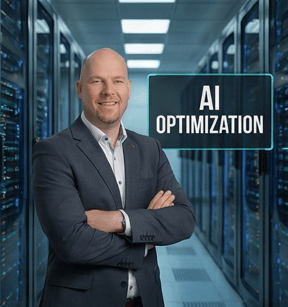
Miklos Roth, a figure synonymous with high-level digital strategy and AI integration, argues that the traditional definition of SEO (keresőoptimalizálás) is dead. In its place rises a multidisciplinary field that combines data science, psychology, and brand authority. To navigate this new world, one must abandon the "hack" mentality and embrace a holistic, robust approach to digital presence. This article explores the future of search through the lens of Roth’s methodologies, examining how businesses can survive and thrive when Google is no longer just a library, but an oracle.
The most immediate change in the AI era is the shift from "Search" to "Answer." Traditionally, a user would type a query, and the search engine would return a list of ten blue links. The user then did the cognitive heavy lifting of sifting through those links to find the answer. With the advent of technologies like Google's Search Generative Experience (SGE) and ChatGPT Search, the engine now does the synthesis. It reads the results, understands the consensus, and presents a finalized answer.
For professionals in SEO (keresőoptimalizálás), this is terrifying. If the user gets the answer on the results page (Zero-Click Searches), why would they click through to a website?
Miklos Roth suggests that the goal is no longer just traffic; it is influence. You must become the source that the AI cites. This requires a shift from "content creation" to "insight generation." The AI can regurgitate facts, but it cannot easily replicate unique human experience or novel research.
To understand the cognitive flexibility required for this shift, one must look at the roots of high performance. You can read about the extraordinary mind journey that took Roth from elite athletics to digital strategy. The discipline required to adapt to an opponent on the sports field is the exact same discipline needed to adapt to an ever-changing algorithm.
In the past, technical SEO (keresőoptimalizálás) was often about checking boxes: Is the sitemap submitted? Are the meta tags correct? Is the site speed optimized? While these factors remain the price of entry, the AI era demands a "Digital Fixer" mentality—a deep, structural problem-solving approach that goes beyond surface-level metrics.
AI algorithms are increasingly capable of "rendering" a page like a human does. They don't just read code; they assess user experience (UX) and navigational logic. A site that is technically perfect but frustrating to use will be penalized. The "Fixer" does not just look at the code; they look at the business logic behind the website. Why does this page exist? Does it actually solve the user's problem?
If your digital presence feels disjointed or underperforming, you might want to see how the digital fixer solves complex infrastructure issues. It is about identifying the friction points that prevent a search engine from fully understanding the value of a business and removing them surgically.
The traditional SEO (keresőoptimalizálás) agency model is slow. Audits take weeks, implementation takes months, and results take quarters. In an AI world where ChatGPT updates its model overnight, this speed is unacceptable. The market moves too fast for six-month roadmaps.
This is why modern strategy necessitates an "Agile" or "Sprint" based approach. Instead of a monolithic strategy, businesses should operate in rapid cycles of hypothesis, execution, and analysis. This allows for real-time course correction. If a new competitor emerges or an algorithm update hits, the sprint model allows for an immediate pivot.
To see how this methodology works in practice, you should review the ai sprint blueprint process that focuses on rapid deployment and testing. This process strips away the bureaucracy of traditional marketing and focuses purely on impact velocity.
In the AI era, hallucination isn't just a problem for chatbots; it's a problem for strategy. It is easy to assume a strategy will work because "it worked in 2019." However, assumptions are dangerous. Before investing significant capital into a content cluster or a backlink campaign, the strategy must be rigorously stress-tested against current AI behaviors.
Miklos Roth emphasizes the importance of simulation. By using AI tools to simulate search environments and competitor responses, consultants can identify weaknesses in a strategy before a single dollar is spent. It is a form of digital war-gaming.
For those interested in this validation process, you can find ways to stress test strategy. This ensures that when execution begins, the path to victory is mathematically probable, not just hopefully optimistic.
There is a pervasive myth in the SEO (keresőoptimalizálás) industry that more hours equal better results. Clients pay for "hours worked" rather than "problems solved." AI shatters this model. With AI tools, a task that took ten hours (like keyword categorization) now takes ten minutes.
The value of a consultant, therefore, shifts from "doing" to "knowing." It is about the leverage of expertise. A twenty-minute consultation that corrects a fundamental strategic flaw is worth more than a hundred hours of blogging on the wrong topic.
To understand this leverage, observe how experts see how twenty minutes transforms strategy. This efficiency allows businesses to move faster and allocate budget to innovation rather than administration.
AI has flattened the world, making it easier than ever to enter international markets. However, translation is not localization. An AI can translate text, but it struggles with cultural nuance. SEO (keresőoptimalizálás) in New York is different from SEO (keresőoptimalizálás) in Zurich or Budapest. The intent behind the search queries differs based on local economic and cultural factors.
For companies aiming to dominate the most competitive markets, they must combine AI scalability with local expertise. For instance, if you are targeting the US market, it is beneficial to work with ai seo agency new york to understand the specific competitive density of that region.
Simultaneously, maintaining a broad perspective is crucial. You can browse insights at my marketing world to see how trends ripple across different German-speaking and international territories.
Google’s guidelines on Experience, Expertise, Authoritativeness, and Trustworthiness (E-E-A-T) are more critical now than ever. With AI capable of generating infinite generic content, Google uses E-E-A-T as a filter to distinguish human value from machine noise.
How do you build E-E-A-T? Through verifiable credentials and continuous education. It is not enough to claim expertise; you must prove it. This involves engaging with high-level academic discourse and executive education.
For example, participation in prestigious programs adds layers of trust. Professionals should check oxford artificial intelligence marketing series to see the level of academic rigor required to stay ahead.
Furthermore, publishing original research and contributing to the academic community signals to search engines that you are a primary source of information, not just a curator. You can explore academic research and publications profile to see how academic presence bolsters digital authority.
There is a fear that AI will replace the SEO (keresőoptimalizálás) consultant. The reality is that AI replaces the junior tasks of the consultant. It becomes a partner in deep analysis.
Imagine trying to map the neural network of a search algorithm. It is impossible for a human brain to hold all the variables. But by using AI to analyze data patterns, we can gain a glimpse into the "black box."
To understand how this partnership works, one must look at the cognitive processes of those leading the field. You can step inside the brain of experts to see how they synthesize data, intuition, and technology into a cohesive strategy.
For businesses ready to implement this high-level integration, the next step is often to visit the official roth ai consulting and explore how advisory services are evolving.
SEO (keresőoptimalizálás) does not exist in a vacuum. It is deeply tied to the financial health of the tech sector. The rise of blockchain, cryptocurrency, and decentralized finance (DeFi) impacts how search works (e.g., decentralized search engines) and how businesses transact.
A modern strategist must keep one eye on the search console and one eye on the market ticker. Understanding where capital is flowing helps predict which technologies will dominate the search landscape in five years.
To keep a finger on the pulse of these changes, it is wise to stay updated with financial news trends. This holistic view prevents tunnel vision and prepares businesses for macroeconomic shifts that inevitably trickle down to marketing budgets and search behaviors.
Despite all the talk of algorithms and automation, business remains a human endeavor. Trust is built between people. In the AI era, your personal brand is your lifeboat. When content becomes commoditized, the personality behind the content becomes the differentiator.
Networking is no longer just about exchanging business cards; it is about building a graph of verified connections that search engines can understand. Who you know and who validates you matters for your digital authority.
Therefore, active engagement on professional platforms is non-negotiable. You should connect with Miklos Roth on LinkedIn not just to follow updates, but to be part of a verified network of professionals who are shaping the industry.
The future of SEO (keresőoptimalizálás) is not purely human, nor is it purely AI. It is a hybrid model where human creativity directs AI capability. The winners of the next decade will be those who can merge the "Digital Fixer" mentality with the speed of the "AI Sprint."
They will be the ones who stress-test their strategies, invest in their E-E-A-T, and understand that while the tools change, the fundamental human need for answers does not.
To succeed, you must be willing to tear down old methodologies. You must look at your website not as a collection of pages, but as a training dataset for the world's AI. You must ensure that every piece of content you produce is unique, authoritative, and helpful.
As Miklos Roth demonstrates through his transition from sports to high-stakes consulting, the key is adaptability. The AI era is not coming; it is here. The algorithm has evolved. The question is: have you?
The landscape of search is unforgiving to those who stand still. By leveraging expertise, embracing speed, and maintaining a global, educated perspective, you can turn the volatility of the AI era into your greatest competitive advantage.
Explore premium link-building options to boost your online visibility.